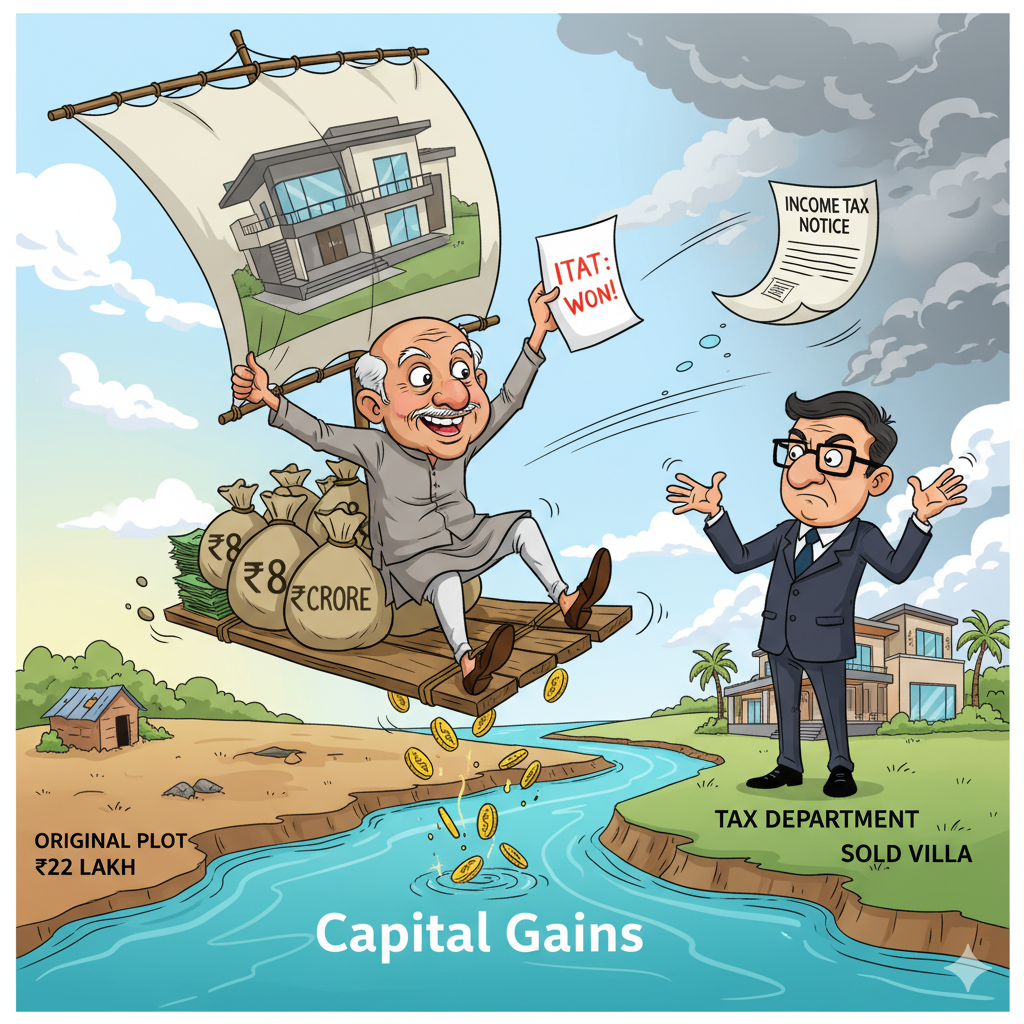
Senior Citizen Wins Tax Battle: From Rs 22 Lakh Plot to Rs 8 Crore Home Sale
𝙄𝙣𝙩𝙧𝙤𝙙𝙪𝙘𝙩𝙞𝙤𝙣: -
Imagine buying a plot of land for Rs 22 lakhs, building a home on it, and years later selling it for a staggering Rs 8 crore. While this sounds like a dream investment, for one senior citizen in Bengaluru, it triggered a nightmare in the form of an Income Tax notice.
Mr. Israni, a non-resident senior citizen, found himself in the crosshairs of the Income Tax Department after selling his Bengaluru property. What followed was a legal tussle over "personal effects" versus "cost of improvement." In a significant relief to taxpayers, the Income Tax Appellate Tribunal (ITAT) Bengaluru recently ruled in his favor, setting a precedent on what can be claimed as tax-deductible expenses during a property sale.
𝙏𝙝𝙚 𝘾𝙖𝙨𝙚:
A Massive Leap in Value In 2005, Mr. Israni and his wife purchased a plot in the Adarsh Palm Retreat, Bengaluru. Over the years, they constructed a house on it, transforming the "uninhabitable" plot into a livable home.
In 2022, the couple sold the property for Rs 8 crore. Since Mr. Israni held a 50% share, he reported his portion of the capital gains in his tax return. However, the sudden jump in value and the specific deductions he claimed flagged his file for scrutiny under the Computer Assisted Scrutiny Selection (CASS).
𝙏𝙝𝙚 𝘿𝙞𝙨𝙥𝙪𝙩𝙚:
What the Taxman Objected To The Assessing Officer (AO) raised objections to three specific expenses Mr. Israni deducted to lower his capital gains tax:
Cost of Improvement (Rs 25.7 Lakhs): Mr. Israni claimed expenses for a rooftop solar plant, air conditioners, wall speakers, and a microwave, arguing these were necessary to make the house "habitable." The AO disallowed this, categorizing them as "personal effects" which are not tax-deductible.
Travel Expenses (Rs 5 Lakhs): He claimed airfare, hotel stays, and meals as "sales expenses," arguing he traveled from Mumbai to Bengaluru solely to execute the sale. The AO rejected this, stating the law doesn't explicitly cover personal travel as a transfer cost.
Acquisition Costs (Rs 11.35 Lakhs): The AO also rejected certain initial construction costs from 2005 because Mr. Israni could not produce bank statements or bills from 17 years ago.
𝙏𝙝𝙚 𝘿𝙚𝙛𝙚𝙣𝙨𝙚:
"Sold As Is, Where Is" Mr. Israni fought back at the ITAT. His key arguments were:
Integral Part of the House: He argued that items like the solar plant and embedded speakers were permanent fixtures. Since the house was sold on an "as is, where is" basis, these items were part of the building's value, not just loose personal items.
𝙃𝙖𝙗𝙞𝙩𝙖𝙗𝙞𝙡𝙞𝙩𝙮:
He contended that a house is not just walls; it requires these installations to be livable.
𝑶𝒍𝒅 𝑹𝒆𝒄𝒐𝒓𝒅𝒔:
Regarding the 2005 costs, he argued that it is unreasonable to expect a senior citizen to produce bank statements for accounts closed years ago, especially when builder confirmations existed.
𝑻𝒉𝒆 𝑽𝒆𝒓𝒅𝒊𝒄𝒕:
A Partial but Major Victory The ITAT Bengaluru delivered a balanced verdict that favored the taxpayer on the most significant points:
✅ Fixtures are Deductible: The Tribunal agreed that items embedded in the walls or ground (like the solar plant and speakers) become part of the building. The ITAT allowed Rs 20.23 lakhs of the claimed improvement cost, ruling that these were integral to the house's sale value.
❌ Movable Items are Not: Mr. Israni voluntarily conceded that movable items like ACs and appliances (approx. Rs 5.5 lakh) were personal effects, and these remained disallowed.
❌ Travel Costs Rejected: The Tribunal stood firm that travel expenses, meals, and courier charges could not be fully substantiated as being "wholly and exclusively" for the transfer of the property. The Rs 5 lakh claim was rejected.
𝑲𝒆𝒚 𝑻𝒂𝒌𝒆𝒂𝒘𝒂𝒚𝒔 𝒇𝒐𝒓 𝑻𝒂𝒙𝒑𝒂𝒚𝒆𝒓𝒔:
Permanent vs. Movable: When selling a furnished house, you can claim deductions for improvements that are permanently fixed to the structure (e.g., false ceilings, solar panels). Movable goods (e.g., furniture, ACs) are generally "personal effects" and do not reduce your capital gains tax.
Document Everything: While Mr. Israni won the argument on old costs, it was a close call. Always maintain digital copies of invoices and bank statements for property construction, even if they are decades old.
"Wholly and Exclusively": To claim expenses like travel or brokerage, you must prove they were incurred strictly for the sale. General visits to the city where the property is located usually don't qualify.